
Stories From The Workshop
Fitting A New Kitchen
Sometimes it is better to replace a kitchen rather than renovate it.
The project
Installation Of A New Kitchen
The brief was to fit a small new kitchen into an existing extension.
The project was discussed in detail to fully understand the customer’s vision of the finished project, prior to purchasing any materials.
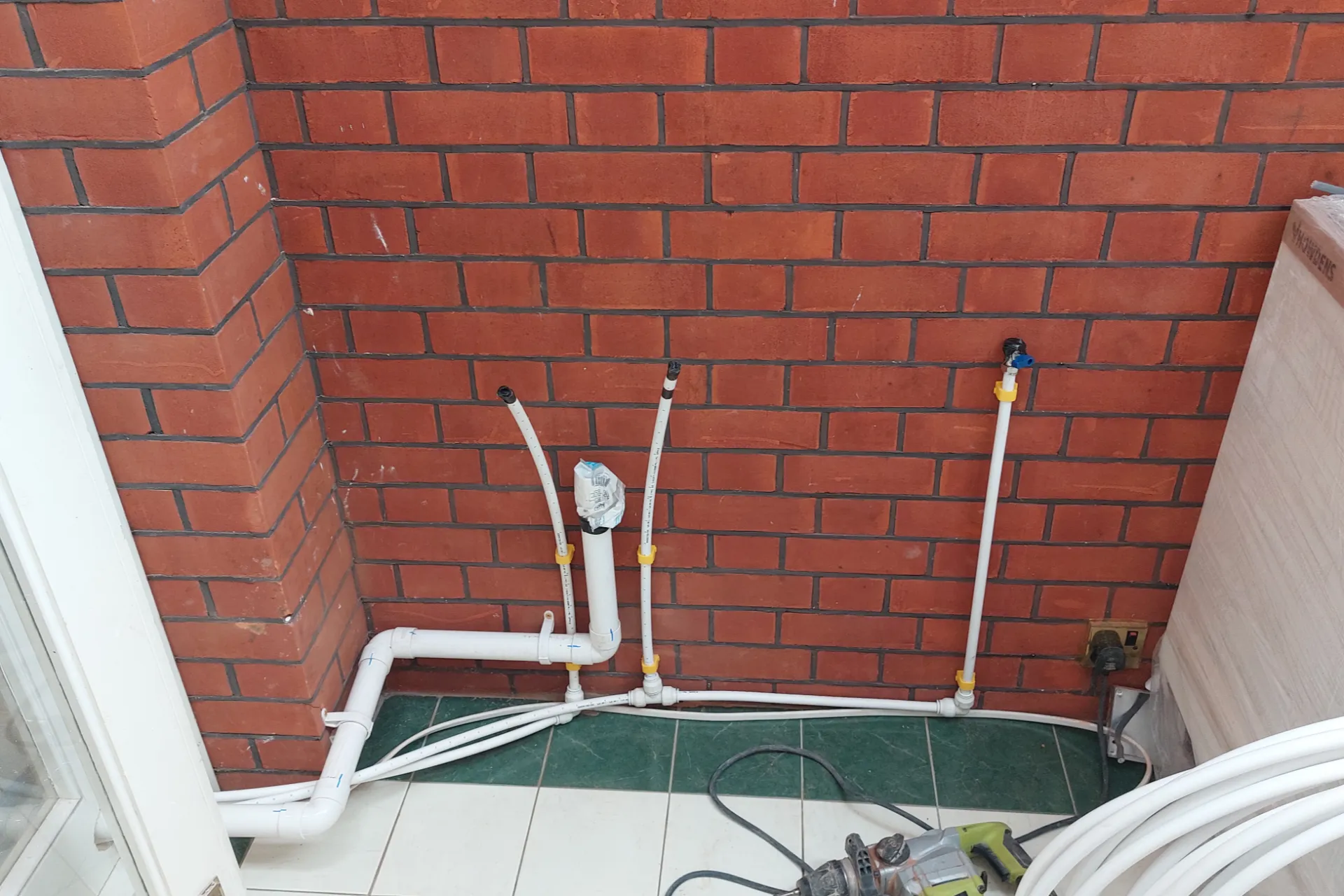
Preparation for water, drainage, electricity and extraction of smells had to the thought out before work could begin, along with dust control and site access ensuring minimal disruption to the customer.
What makes the difference
The details matter
Many of the things that make a kitchen installation look professional are small individually, but very noticeable when they are not right.
Alignment
Cupboards, doors and panels need to line up cleanly so that the finished kitchen looks balanced.
Adjustment
Doors and fittings often require final adjustment so that they operate properly and sit consistently.
Problem solving
Real rooms are rarely perfectly square or straightforward, so practical solutions are often needed during installation.
Finishing
The final details bring the individual elements together and make the installation feel complete.
The process
A kitchen comes together one careful stage at a time
Each part of the installation affects the next, so attention to detail throughout the job is essential.
Plan
The intended layout, available space and positioning of the kitchen units are considered before installation begins.
Position
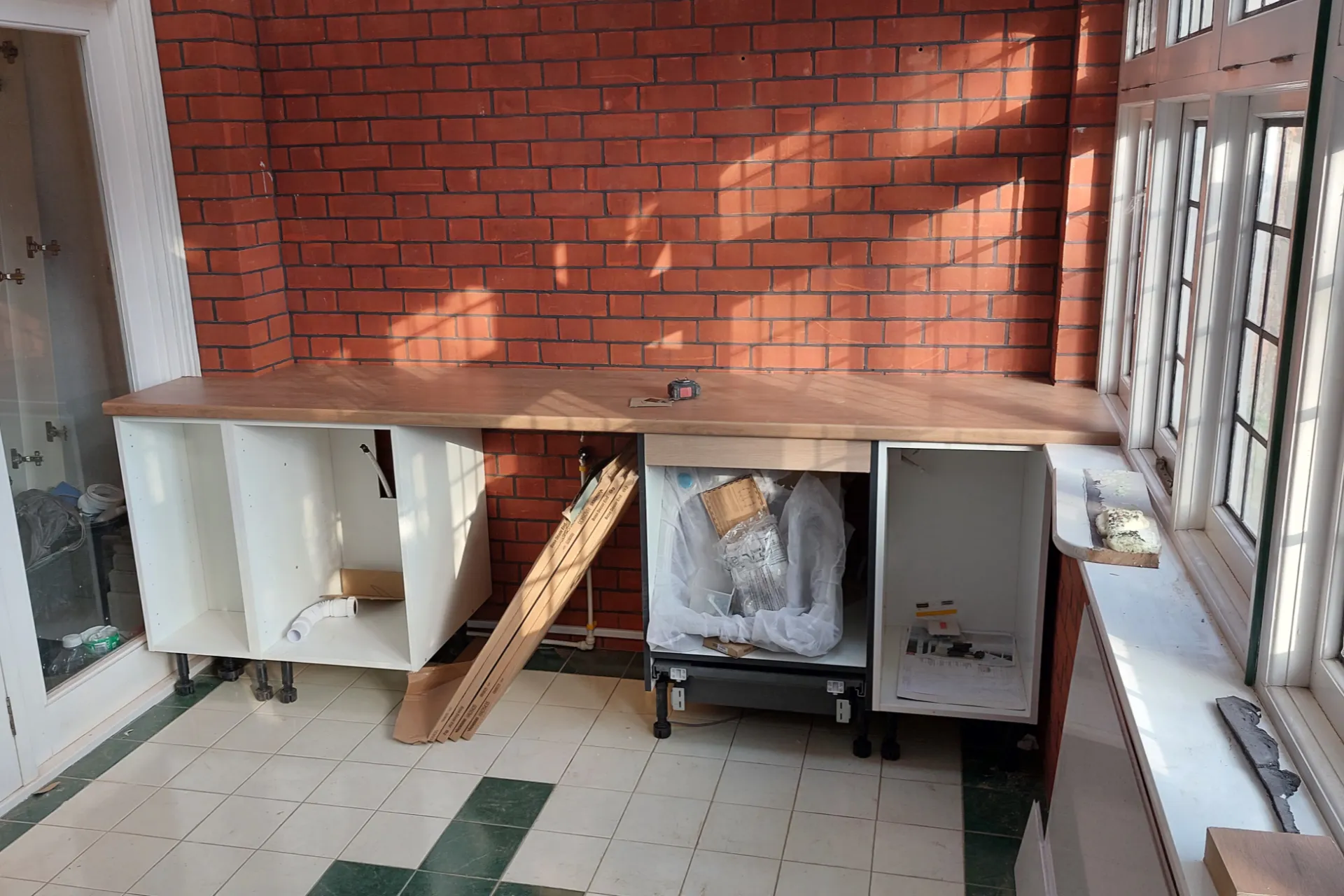
Units are assembled and positioned carefully so that the main structure of the kitchen is level, aligned and properly arranged.
Fit
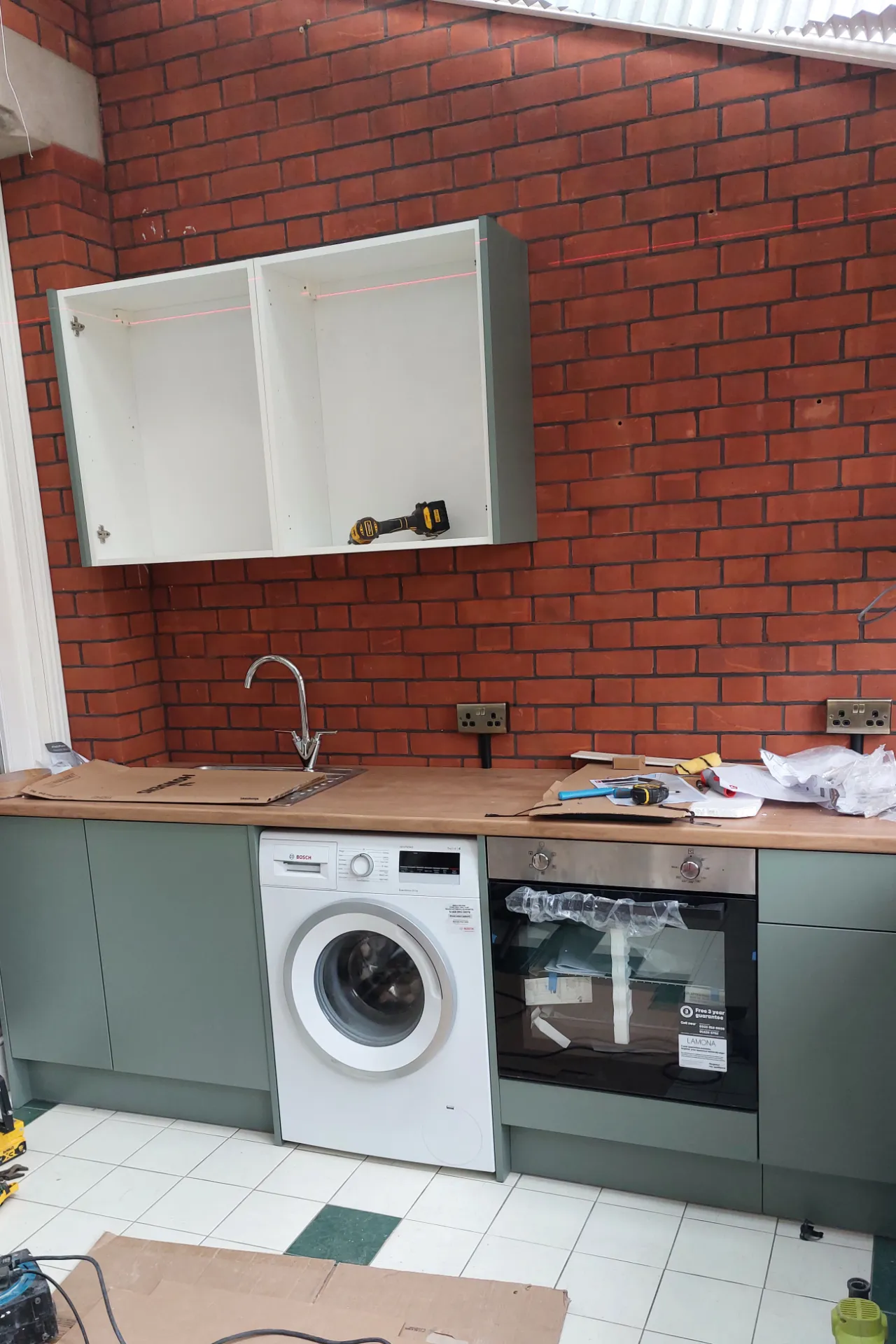
Doors, panels, fittings and other components are installed and adjusted as the kitchen develops.
Adjust
The individual elements are checked so that doors open properly, gaps are consistent and everything works together.
Finish
The smaller finishing details are completed so that the kitchen looks coherent rather than simply assembled.
Check
The completed installation is inspected and adjusted where necessary before the kitchen is ready to use.
Step by step
Four stages of the transformation
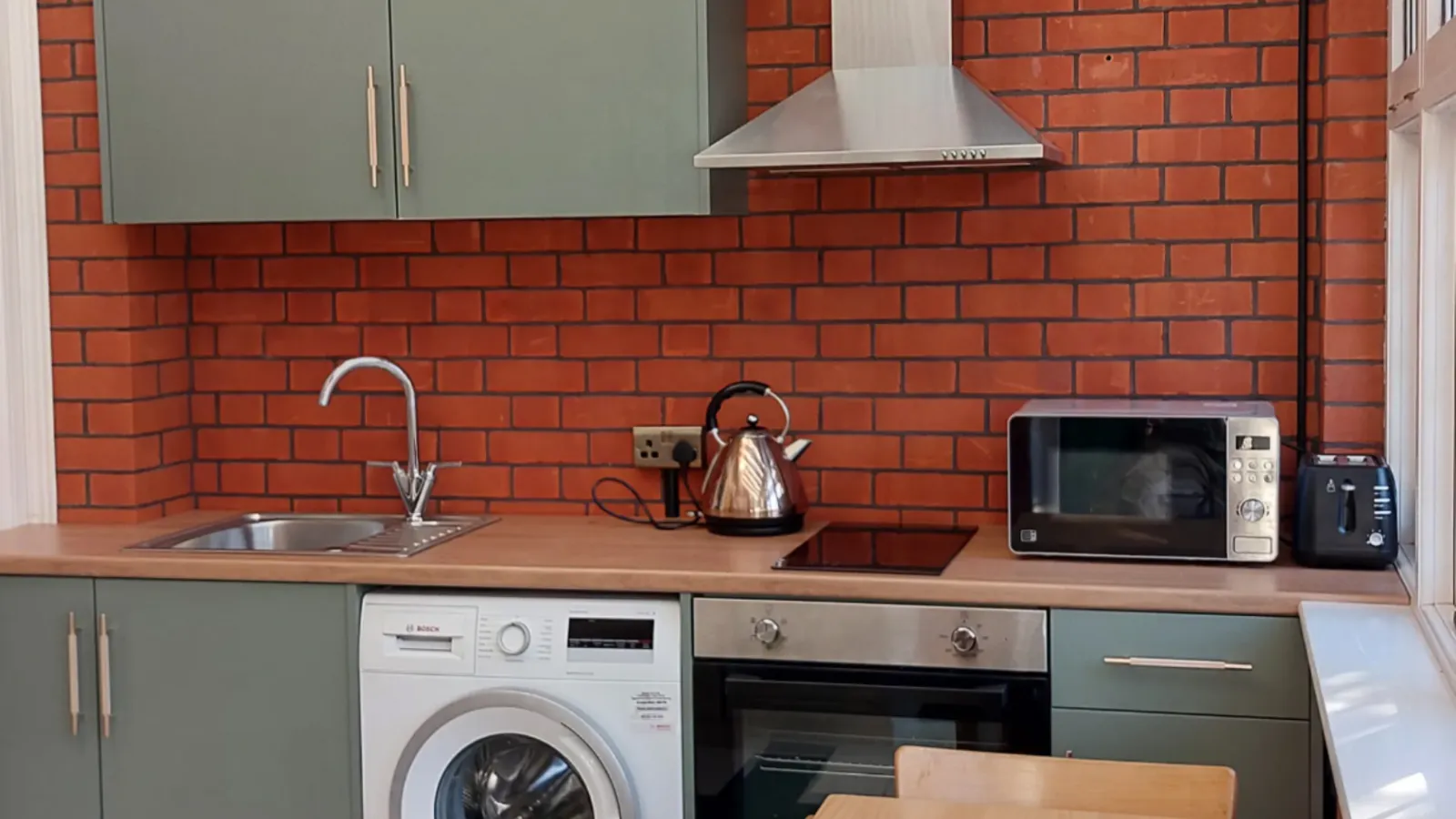
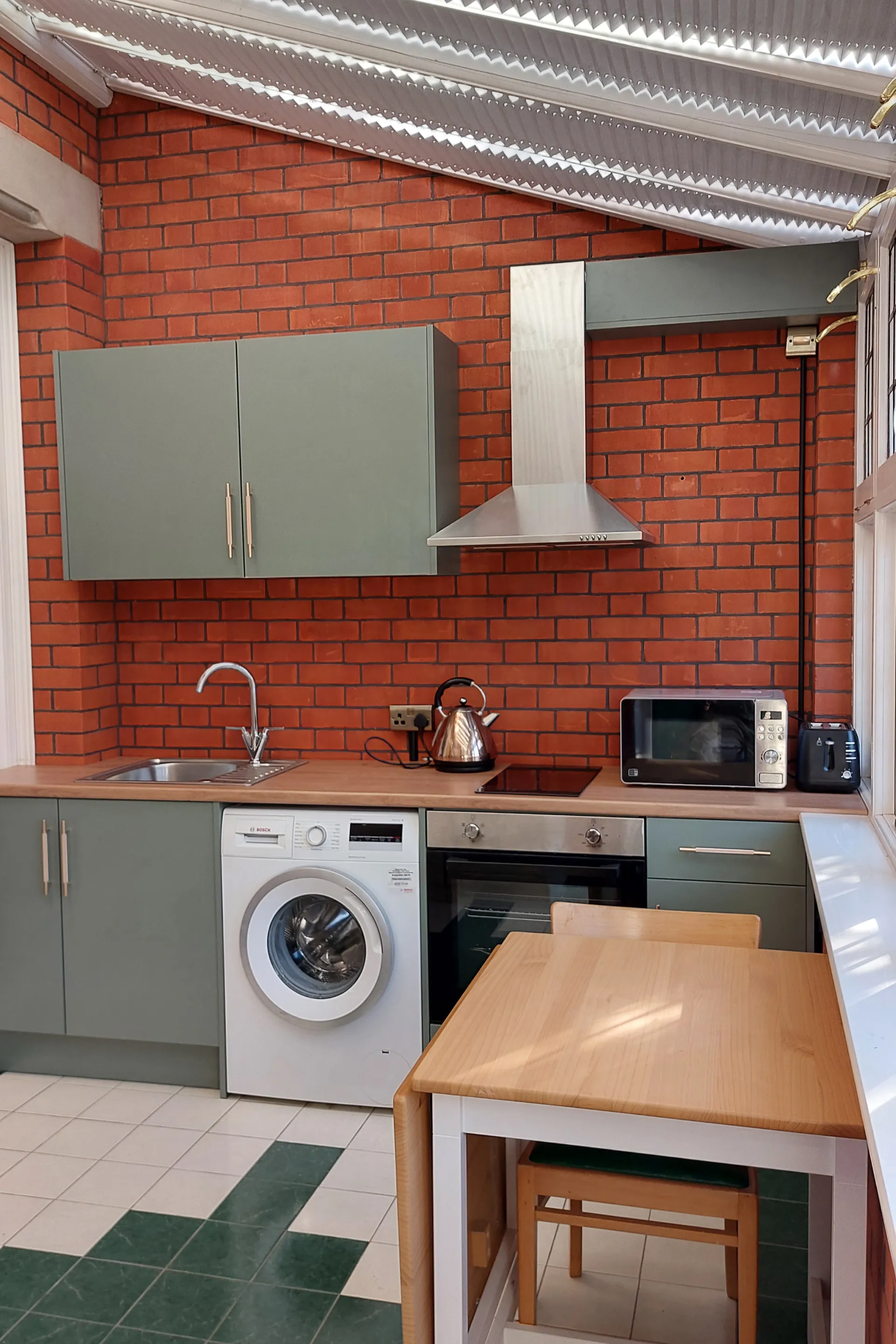
These photographs show the kitchen progressing from the original starting point through the installation to the finished room.
 1
1
 2
2
 3
3
 4
4
The finished result
From work in progress to a finished room
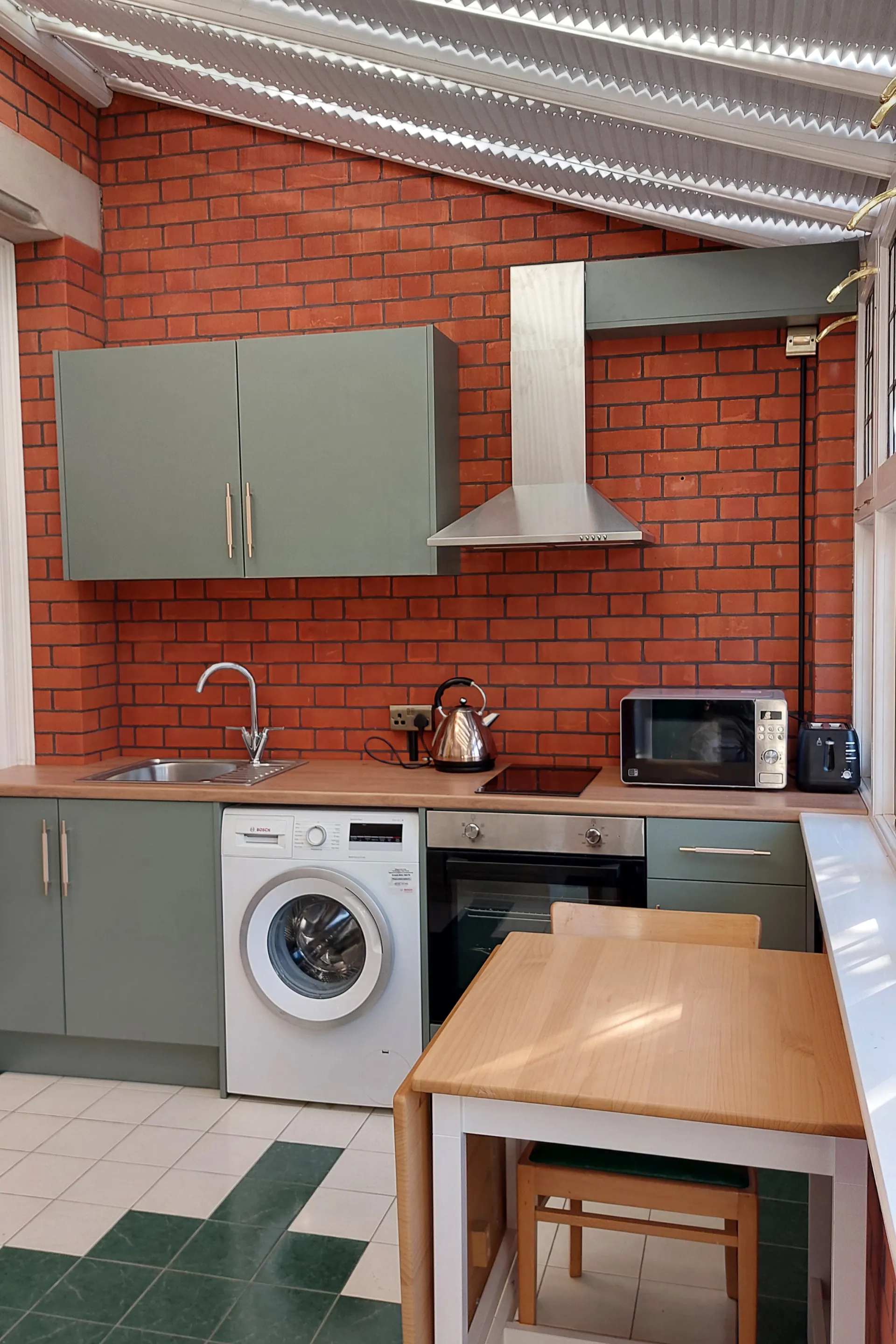
By the end of the project, the collection of individual cupboards, panels, fittings and components had become a complete kitchen.
The progression photographs show how much of the finished result depends upon the work carried out during the less glamorous intermediate stages.
Careful fitting and adjustment throughout the installation ultimately determine how well the finished kitchen both looks and works.
What this project demonstrates
More than simply assembling kitchen units
Planning
Understanding how the individual elements need to work together before installation progresses too far.
Practical fitting
Accurate assembly and positioning form the foundation of the finished kitchen.
Adaptability
Existing rooms frequently present small problems that require a sensible and considered solution.
Attention to detail
The quality of the finished appearance depends heavily on the care taken over the smaller details.
Thinking about changing your kitchen?
Tell Dmytro what you would like to achieve
Whether you are considering a complete kitchen installation or only need help with part of an existing kitchen, photographs are a very useful starting point.